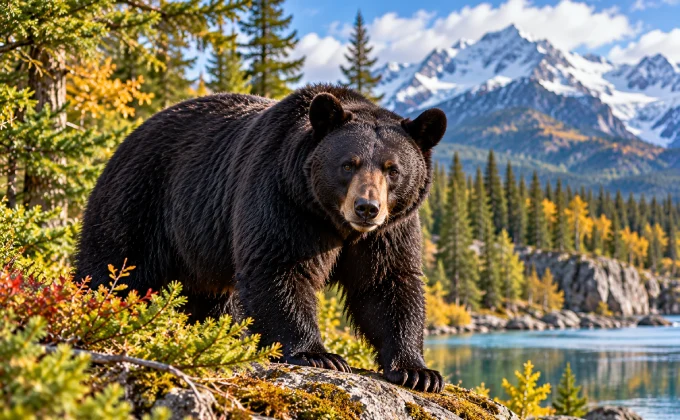
The American black bear is one of North America’s most recognizable large mammals. Found across extensive forests, mountain ranges, and wilderness areas, these adaptable animals play an important role in the continent’s natural ecosystems.
People researching black bear hunting often encounter information about bear populations, geographic distribution, seasonal behavior, and wildlife management. Understanding these subjects provides useful background about the species and the environments it inhabits.
Known scientifically as Ursus americanus, the American black bear is the most widely distributed bear species in North America.
Despite its name, the black bear is not always black. Its coat may range from jet black to brown, cinnamon, blond, and occasionally white.
This guide explores American black bear habitat, physical characteristics, feeding behavior, seasonal activity, reproduction, and conservation.
What Is an American Black Bear?
The American black bear belongs to the family Ursidae and is native to North America.
Black bears are generally smaller than brown bears, although body size varies considerably between regions and individuals.
They have strong bodies, relatively short tails, and powerful limbs.
Physical Characteristics
American black bears have several recognizable features:
- Rounded ears
- A relatively straight facial profile
- Strong legs and broad paws
- Short, curved claws
- Thick seasonal coats
- Highly developed senses of smell
Their claws and muscular bodies make them capable climbers.
Black bears are also strong swimmers and can travel through diverse landscapes.
Where Do Black Bears Live in North America?
American black bears occupy a broad geographic range extending across Canada, the United States, and parts of northern Mexico.
They are particularly associated with forested environments that provide food, shelter, and suitable denning locations.
Black Bears in the United States
Black bears occur in numerous states, including Alaska, Montana, Colorado, Maine, Pennsylvania, Tennessee, North Carolina, and others.
Their distribution varies according to habitat availability and historical population changes.
Black Bears in Canada
Canada supports extensive black bear populations across forested regions.
Boreal forests, mixed woodlands, and mountainous environments provide important habitat.
Black Bears in Alaska
Alaska contains large areas of suitable black bear habitat.
Black bears occupy forested landscapes throughout much of the state, although their distribution differs from that of brown bears and polar bears.
Understanding Black Bear Habitat
Black bears are highly adaptable mammals.
They can occupy a variety of environments when sufficient food and shelter are available.
Deciduous Forests
Hardwood forests provide seasonal foods such as nuts, berries, and other vegetation.
These environments are especially important during periods when bears build energy reserves.
Coniferous Forests
Conifer forests offer cover, denning opportunities, and access to natural food resources.
Black bears may use these habitats throughout different seasons.
Mountain Habitats
Mountain landscapes contain diverse vegetation communities.
Bears may use forests, slopes, and valleys according to seasonal food availability.
Wetlands and Riparian Areas
Wetlands and streamside habitats can provide vegetation, insects, and other food sources.
These areas contribute to the diversity of black bear ecosystems.
What Do American Black Bears Eat?
American black bears are omnivores.
Although they are classified as carnivores taxonomically, much of their diet consists of plant material.
Their food preferences change throughout the year.
Spring Diet
After emerging from winter dens, black bears may consume grasses, emerging vegetation, and other available foods.
They may also feed on insects and animal material.
Summer Diet
Summer brings greater availability of berries, fruits, insects, and vegetation.
These resources help bears recover body condition and prepare for autumn.
Fall Feeding
Autumn is a particularly important feeding period.
Black bears may consume large quantities of food to accumulate fat reserves.
This period of increased food consumption is called hyperphagia.
Foods such as acorns, nuts, and berries can be especially valuable.
Black Bear Size and Weight
American black bear size varies substantially.
Adult males are generally larger than females.
Body weight depends on genetics, age, region, season, and nutritional conditions.
Why Black Bear Size Varies
Bears living in productive habitats may have access to more abundant food.
Environmental conditions also influence growth and body condition.
Seasonal Weight Changes
Black bears commonly gain substantial weight during late summer and autumn.
These energy reserves support them during winter denning, when feeding is greatly reduced or absent.
Black Bear Color Phases
One of the most interesting characteristics of American black bears is their coat color variation.
Although black is common, other colors occur naturally.
Black Color Phase
Black coats are widespread across much of the species’ range.
Cinnamon and Brown Black Bears
Some populations contain bears with brown or cinnamon-colored coats.
These animals remain American black bears despite their lighter appearance.
Blond and Other Color Variations
Blond-colored black bears occur in some western populations.
Rare white-coated black bears are also found in certain regions of British Columbia.
Coat color alone is not a reliable way to distinguish black bears from brown bears.
Black Bear vs. Grizzly Bear
Black bears and grizzly bears are different species.
Understanding their physical characteristics helps explain their ecological differences.
Body Structure
Grizzly bears typically have a prominent shoulder hump.
Black bears generally lack the same pronounced muscular hump.
Facial Profile
Black bears often have a relatively straight facial profile.
Grizzlies commonly have a more dished facial appearance.
Claws
Black bear claws are generally shorter and more curved.
Grizzly claws are often longer and better adapted for digging.
Habitat
Both species occupy forests and mountainous regions, but their geographic ranges and habitat preferences differ.
Black Bear Seasonal Behavior
Black bear activity changes with temperature, daylight, and food availability.
Spring Activity
During spring, bears emerge from dens and begin using available food resources.
The timing varies by region.
Summer Behavior
Black bears may travel through different habitats as seasonal food becomes available.
They are generally solitary animals, although interactions occur during breeding and around concentrated food resources.
Autumn Preparation
During autumn, bears increase feeding activity to build fat reserves.
Winter Denning
In colder regions, black bears spend extended periods in winter dens.
Their metabolism slows, allowing them to conserve energy.
Denning duration depends on environmental conditions and individual circumstances.
Black Bear Reproduction and Cubs
Black bears generally breed during late spring and summer.
Females typically give birth while denning during winter.
Newborn cubs are small and completely dependent on their mothers.
Maternal Care
Female black bears provide nourishment and protection during their cubs’ early development.
Cubs remain with their mothers while learning essential survival behaviors.
Growing Independence
As young bears mature, they gradually become independent.
Their development depends on nutrition, habitat conditions, and other environmental factors.
The Ecological Importance of Black Bears
Black bears contribute to forest ecosystems through feeding, movement, and interactions with other species.
Seed Dispersal
Bears consume berries and fruits.
Seeds may pass through their digestive systems and be deposited in different locations.
This process can contribute to plant dispersal.
Nutrient Cycling
Black bears interact with plant and animal food sources.
Their feeding activities contribute to nutrient movement within ecosystems.
Wildlife Relationships
Black bears share habitats with deer, birds, small mammals, and numerous other species.
These interactions form part of complex ecological communities.
American Black Bear Conservation
Black bear conservation involves habitat protection, population research, and responsible wildlife management.
Wildlife agencies monitor populations and evaluate environmental conditions.
Habitat Connectivity
Large connected habitats allow bears to access seasonal resources.
Fragmentation can create challenges for wildlife movement.
Scientific Monitoring
Researchers study bear populations through surveys, biological research, and habitat assessments.
This information supports conservation decisions.
Reducing Human-Wildlife Conflict
Bears may be attracted to unsecured garbage, food, or other human-associated resources.
Responsible food storage and public education can help reduce preventable encounters.
Responsible Black Bear Wildlife Observation
Black bears are wild animals and should always be treated with caution.
People observing bears should follow official wildlife safety recommendations, maintain appropriate distances, and avoid feeding or approaching animals.
Park regulations and local guidance may differ depending on the environment.
For reliable educational resources, visit:
- National Park Service – Bears
- U.S. Fish & Wildlife Service
- Alaska Department of Fish and Game
Readers interested in broader wilderness destinations and outdoor experiences can also explore Hunt Nation.
Frequently Asked Questions
1. Are all American black bears black?
No. American black bears can have black, brown, cinnamon, blond, and occasionally white coats. Color varies according to genetics and geographic population.
2. What do black bears eat?
Black bears are omnivores. Their diet includes berries, nuts, grasses, insects, and other available plant and animal foods. Diet composition changes seasonally.
3. Do American black bears hibernate?
Black bears spend winter in dens in many regions. During this period, their metabolic activity decreases significantly, allowing them to conserve energy while consuming little or no food.
Final Thoughts
American black bears are among North America’s most adaptable and ecologically important large mammals.
Their varied habitats, flexible diets, seasonal behavior, and remarkable coat colors make them fascinating animals to study.
From Alaska’s forests to the Appalachian Mountains and Canada’s boreal landscapes, black bears depend on healthy ecosystems and accessible natural resources.
Understanding black bear biology and conservation highlights the importance of habitat protection, scientific research, and responsible wildlife management.
Protecting these environments supports not only black bears but also the many other species that share their habitats.